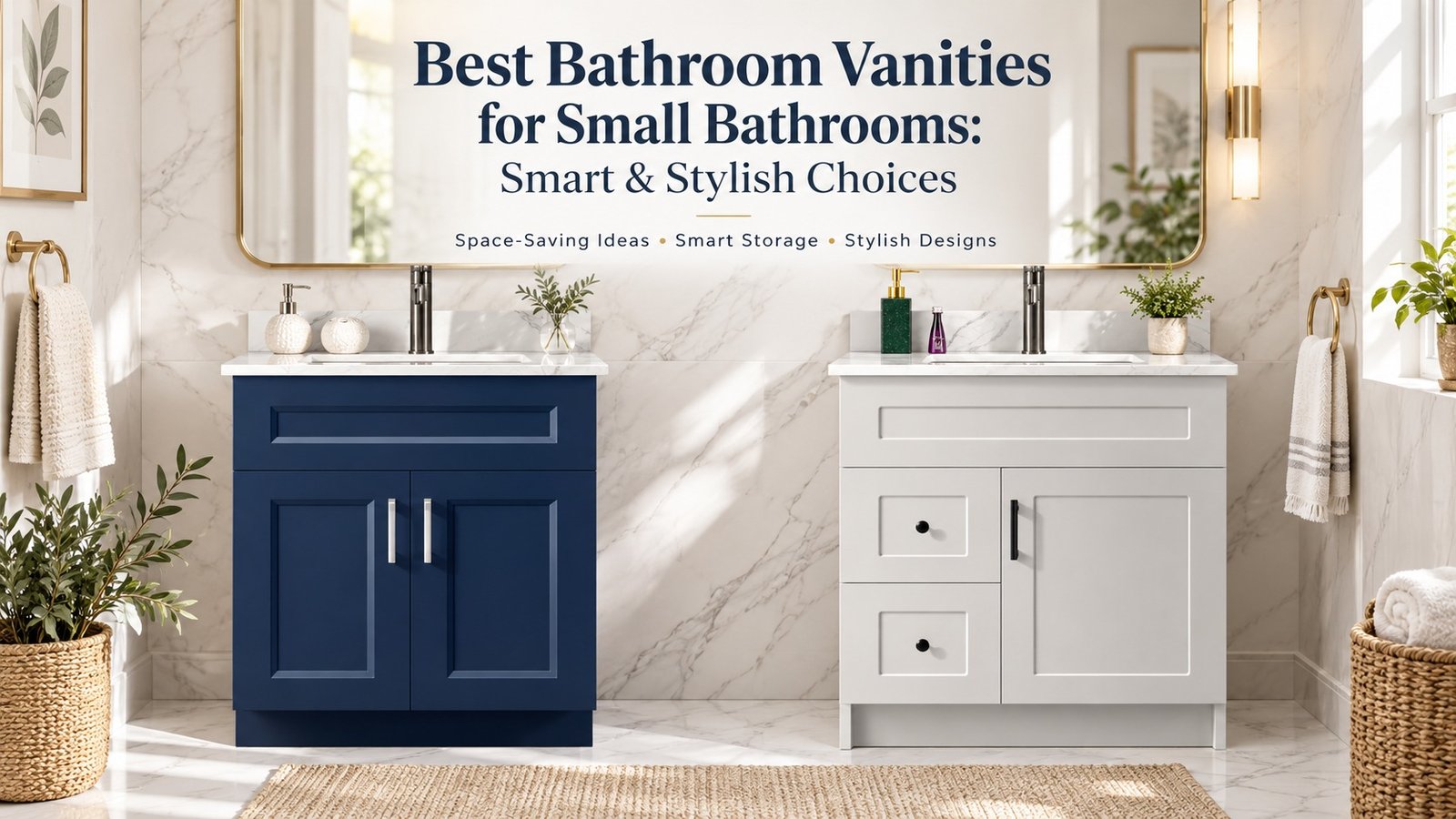
Best Bathroom Vanities for Small Bathrooms: Smart & Stylish Choices
A small bathroom can be challenging to design, especially when you need enough storage without making the space feel cramped. The right bathroom vanity can solve both problems. A well-chosen vanity provides essential storage, supports your sink, and can even make a compact bathroom appear more spacious.
Whether you’re renovating a powder room, guest bathroom, or compact master bath, choosing the right size, style, and configuration is important. Here are some of the best bathroom vanity options for small bathrooms and tips to help you make the most of your available space.
1. Wall-Mounted Bathroom Vanities
Wall-mounted, or floating, vanities are an excellent choice for compact bathrooms. Because they are installed above the floor, they create an open area underneath, making the bathroom appear larger and less crowded.
Why choose a floating vanity?
Creates a more spacious visual effect. Makes floor cleaning easier. Provides a contemporary appearance. Can be installed at a comfortable height. Works well in narrow bathrooms.
For an especially small bathroom, consider a slim floating vanity with drawers rather than a large cabinet with swinging doors.
2. Corner Bathroom Vanities
Unused corners can provide valuable space in a small bathroom. A corner vanity is designed to fit neatly into an otherwise difficult-to-use area while leaving more room for movement.
Corner vanities are particularly useful in powder rooms and bathrooms with unusual layouts. Pairing one with a corner sink can maximize the available floor area.
3. Slim Bathroom Vanities
Sometimes, the best solution is simply choosing a vanity with a smaller depth. Standard vanities can extend significantly into the room, so a slim-depth model can make a noticeable difference.
Look for:
Reduced-depth cabinets. Narrow countertops. Compact sinks. Vertical storage. Drawers that maximize usable space.
A slim vanity can provide the functionality of a traditional vanity while preserving valuable walking space.
4. Single-Sink Vanities
For a small bathroom, a single-sink vanity is usually more practical than a double-sink configuration. A single basin requires less countertop and cabinet space, leaving additional room for storage or movement.
Choose a design with drawers or adjustable shelving to make the most of the cabinet interior.
5. Open-Shelf Vanities
If your bathroom needs to feel light and airy, consider a vanity with open shelving. Open shelves can visually reduce the bulk of the furniture and give you a convenient place for towels, baskets, and frequently used items.
For a neat appearance, use matching storage baskets or neatly folded towels. If you prefer a cleaner look, combine a small open shelf with one or two closed drawers.
6. Mirrored Bathroom Vanities and Cabinets
When space is limited, multifunctional furniture can be particularly useful. A mirrored medicine cabinet positioned above the vanity can provide additional storage without requiring extra floor space.
Choose a cabinet with adjustable shelves for toiletries, skincare products, and other bathroom essentials.
A large mirror can also reflect light and contribute to a more open feeling, although the actual effect depends on the bathroom’s layout and lighting.
How to Choose the Right Vanity for a Small Bathroom
Before purchasing a vanity, measure your bathroom carefully. Don’t measure only the wall where the vanity will go—consider the entire area around it.
1. Measure the available width: Determine how much wall space is available. Leave enough room for doors, drawers, and other fixtures to operate comfortably.
2. Check the vanity depth: Depth is particularly important in a small bathroom. A vanity that is too deep can make the room difficult to navigate.
3. Consider plumbing locations: If you’re replacing an existing vanity, keeping the plumbing in roughly the same location can simplify installation and potentially reduce renovation costs.
4. Think about storage needs: A compact vanity doesn’t have to mean inadequate storage. Look for drawers, adjustable shelves, and vertical compartments that use the available space efficiently.
5. Choose the right sink: An integrated, undermount, vessel, or compact basin can change how much counter space and storage you have available. The sink should complement both the vanity and the room’s proportions.
6. Consider door and drawer clearance: Make sure vanity doors and drawers won’t collide with the bathroom door, shower enclosure, toilet, or other fixtures.
What Vanity Style Makes a Small Bathroom Look Bigger?
There isn’t one style that works for every bathroom, but certain design choices can help create a more open appearance.
A floating vanity, light-colored finish, streamlined hardware, and large mirror can give a small bathroom a cleaner, less visually crowded look. Minimal detailing and a simple countertop can also help maintain an uncluttered appearance.
However, darker colors and traditional vanity designs can work beautifully in small bathrooms too when the overall layout and lighting are carefully planned.
Best Vanity Materials for Bathrooms
Bathroom vanities are exposed to humidity and occasional water, so material selection matters.
Popular options include:
Solid wood: Durable and attractive when properly finished. HDF: Provides a smooth surface and can be cost-effective when properly sealed. Quartz countertops: Durable and relatively low-maintenance. Ceramic or porcelain tops: Practical choices for many bathroom applications.
Regardless of the material, good ventilation and proper installation are important for protecting the vanity from excessive moisture.
Small Bathroom Vanity Ideas by Bathroom Type
Powder Room
A compact wall-mounted vanity or pedestal sink can work well because powder rooms generally require less storage.
Guest Bathroom
A slim single-sink vanity with drawers provides a balance between storage and floor space.
Small Family Bathroom
Choose a vanity with efficient drawers and cabinets so everyday toiletries can be stored out of sight.
Narrow Bathroom
A shallow-depth floating vanity can preserve the walkway while still providing useful storage.